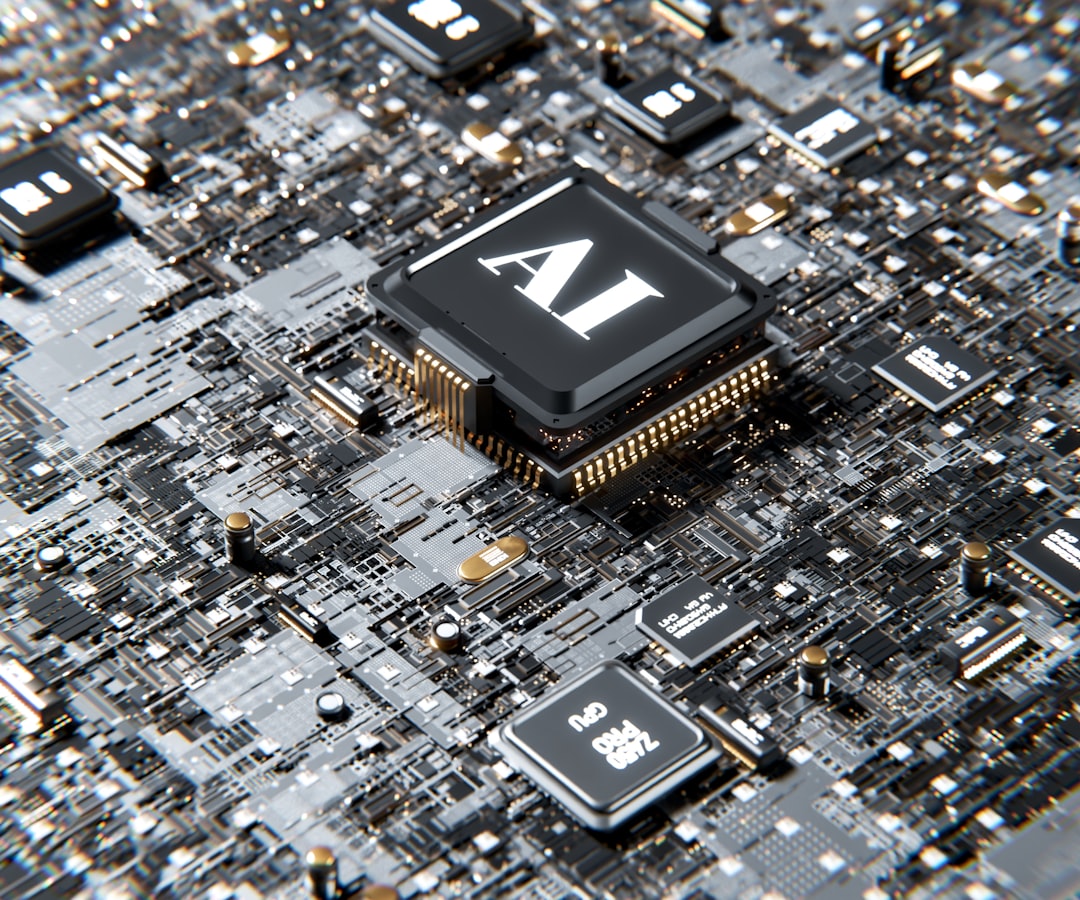
The Future of Artificial Intelligence
Artificial intelligence stands at an inflection point, poised to reshape virtually every aspect of human society. From healthcare and education to transportation and entertainment, AI technologies are advancing at an unprecedented pace. Understanding where this technology is headed helps us prepare for the opportunities and challenges that lie ahead.
Current State of AI
Today's AI systems excel at specific tasks like image recognition, language translation, and game playing. These narrow AI applications have achieved superhuman performance in their domains. However, they lack the general intelligence and adaptability that humans possess naturally.
Recent breakthroughs in large language models and multimodal AI systems demonstrate impressive capabilities in understanding and generating human-like content. These advances hint at the potential for more versatile AI systems that can handle diverse tasks with minimal retraining.
Emerging Trends in AI Technology
Generative AI is transforming creative industries and knowledge work. Systems that can generate text, images, music, and code are becoming increasingly sophisticated and accessible. This technology augments human creativity rather than replacing it, enabling new forms of expression and problem-solving.
Edge AI brings artificial intelligence to devices at the network edge, reducing latency and improving privacy. Smartphones, autonomous vehicles, and IoT devices increasingly incorporate AI capabilities, enabling real-time processing without constant cloud connectivity. This trend makes AI more responsive and secure.
Explainable AI addresses the black-box nature of many machine learning systems. As AI influences critical decisions in healthcare, finance, and criminal justice, understanding how these systems reach conclusions becomes essential. Research focuses on making AI decision-making transparent and interpretable.
Healthcare Revolution
AI is revolutionizing medical diagnosis and treatment planning. Machine learning algorithms analyze medical images with accuracy matching or exceeding human experts. These systems detect diseases earlier, when treatments are most effective, potentially saving countless lives.
Drug discovery accelerates dramatically with AI assistance. Traditional pharmaceutical development takes years and costs billions. AI systems screen millions of molecular combinations rapidly, identifying promising candidates for further testing. This efficiency could bring life-saving medications to market faster and more affordably.
Personalized medicine tailors treatments to individual patients based on their genetic makeup, lifestyle, and medical history. AI analyzes vast amounts of patient data to recommend optimal treatment strategies, improving outcomes while reducing side effects and healthcare costs.
Transforming Education
Adaptive learning systems customize educational content to each student's needs, pace, and learning style. AI tutors provide personalized guidance, identifying knowledge gaps and adjusting instruction accordingly. This individualized approach helps students master material more effectively than one-size-fits-all curricula.
Automated grading and feedback free educators to focus on teaching rather than administrative tasks. AI systems evaluate written assignments, provide constructive feedback, and track student progress over time. Teachers gain insights into class performance patterns, enabling targeted interventions.
Language learning benefits enormously from AI-powered tools that provide conversation practice, pronunciation feedback, and cultural context. These systems make language education more accessible and effective, breaking down communication barriers worldwide.
Autonomous Transportation
Self-driving vehicles promise to revolutionize transportation, potentially reducing accidents, easing congestion, and providing mobility to those unable to drive. AI systems process data from multiple sensors, making split-second decisions to navigate complex traffic situations safely.
Traffic management systems optimize flow through cities using AI to predict and respond to congestion. Smart traffic lights adjust timing based on real-time conditions, reducing wait times and emissions. These improvements make urban transportation more efficient and sustainable.
Logistics and delivery benefit from AI-optimized routing and scheduling. Companies use machine learning to predict demand, optimize warehouse operations, and plan efficient delivery routes. These efficiencies reduce costs and environmental impact while improving service quality.
Business and Industry Applications
Customer service transforms through AI chatbots and virtual assistants that handle routine inquiries, freeing human agents for complex issues. Natural language processing enables these systems to understand context and emotion, providing increasingly helpful and empathetic responses.
Predictive maintenance uses AI to monitor equipment and predict failures before they occur. Sensors collect operational data that machine learning models analyze to identify patterns indicating impending problems. This approach reduces downtime and maintenance costs significantly.
Financial services employ AI for fraud detection, risk assessment, and algorithmic trading. Machine learning systems identify suspicious transactions in real-time, protecting customers and institutions from financial crime. Credit scoring becomes more accurate and fair through AI analysis of diverse data sources.
Ethical Considerations and Challenges
Bias in AI systems raises serious concerns about fairness and equality. Models trained on historical data may perpetuate existing biases, leading to discriminatory outcomes. Addressing this challenge requires diverse development teams, careful data curation, and ongoing monitoring of system behavior.
Privacy concerns grow as AI systems collect and analyze vast amounts of personal data. Balancing the benefits of AI with individual privacy rights requires thoughtful regulation and technical safeguards. Techniques like federated learning enable AI training while preserving data privacy.
Job displacement worries many as AI automates tasks previously performed by humans. While AI will eliminate some jobs, it will also create new ones requiring different skills. Society must invest in education and retraining to help workers adapt to this changing landscape.
Preparing for an AI-Driven Future
Education systems must evolve to prepare students for an AI-enabled world. Critical thinking, creativity, and emotional intelligence become increasingly valuable as routine cognitive tasks are automated. STEM education remains important, but so do humanities and social sciences that help us navigate AI's societal impacts.
Regulation must keep pace with technological advancement, establishing guardrails that protect society while enabling innovation. Policymakers need to understand AI capabilities and limitations to craft effective legislation. International cooperation ensures consistent standards across borders.
Public engagement and literacy around AI technology are crucial for informed decision-making. As citizens, we must understand AI's capabilities, limitations, and implications to participate meaningfully in discussions about its development and deployment. Education initiatives should make AI concepts accessible to everyone.
Looking Ahead
The next decade will likely bring AI capabilities we can scarcely imagine today. General artificial intelligence, while still distant, moves closer to reality as research progresses. The integration of AI into daily life will deepen, making these technologies invisible yet indispensable.
Success in this AI-driven future requires thoughtful development guided by ethical principles and human values. Technology should serve humanity, augmenting our capabilities while respecting our rights and dignity. By working together across disciplines and borders, we can shape an AI future that benefits everyone.