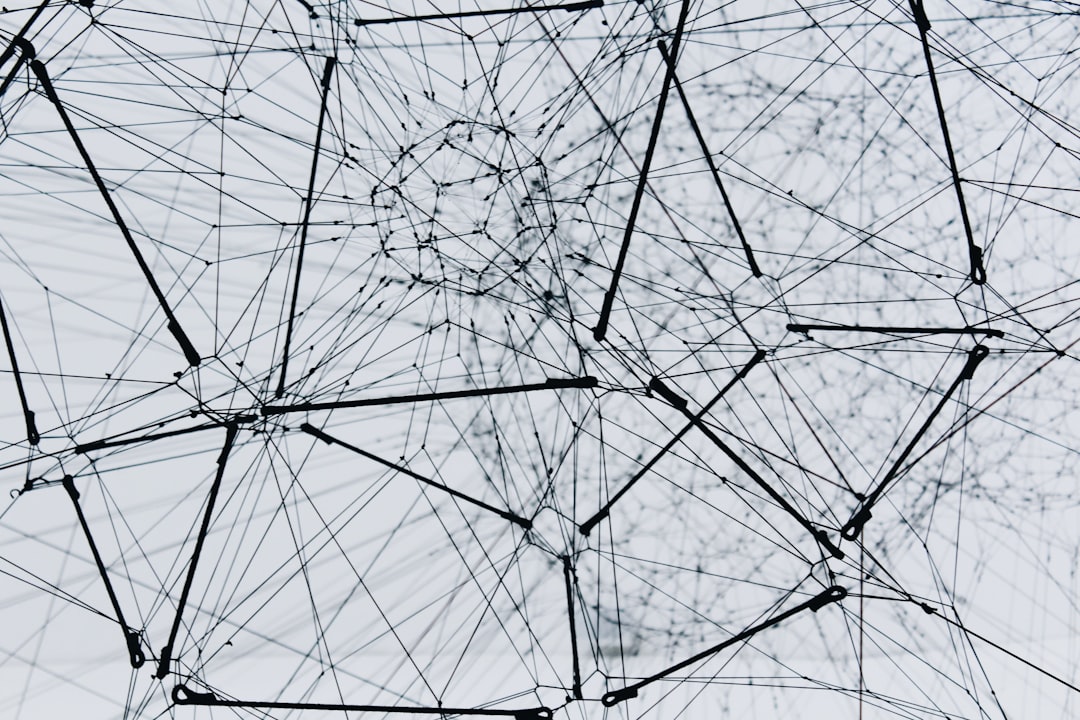
Understanding Neural Networks
Neural networks have revolutionized the field of artificial intelligence, enabling machines to learn from data in ways that were once thought impossible. These sophisticated systems mimic the structure and function of the human brain, creating powerful tools for solving complex problems across numerous domains.
What Are Neural Networks?
At their core, neural networks are computational models inspired by biological neural networks in animal brains. They consist of interconnected nodes, or neurons, organized in layers. Each connection between neurons carries a weight that adjusts as learning proceeds, making the network increasingly accurate at performing specific tasks.
The basic structure includes an input layer that receives data, one or more hidden layers that process information, and an output layer that produces results. This architecture allows neural networks to identify patterns, classify information, and make predictions based on training data.
The Architecture Explained
Understanding the architecture of neural networks is crucial to grasping how they function. The input layer receives raw data, which could be images, text, audio, or numerical values. Each input is assigned a weight that determines its importance in the decision-making process.
Hidden layers perform the bulk of computational work. These layers apply mathematical transformations to the input data, extracting increasingly abstract features. Early layers might detect simple patterns like edges in images, while deeper layers recognize more complex structures like shapes or objects.
The output layer presents the final result, whether that's a classification, prediction, or generated content. Activation functions at each layer introduce non-linearity, enabling the network to learn complex relationships in the data.
How Neural Networks Learn
Learning in neural networks occurs through a process called backpropagation. During training, the network makes predictions on input data and compares these predictions to known correct answers. The difference, or error, is calculated and propagated backward through the network.
This backward pass adjusts the weights of connections between neurons, gradually improving the network's performance. The process repeats thousands or millions of times, with the network becoming increasingly accurate with each iteration. This iterative refinement is what allows neural networks to master complex tasks.
Types of Neural Networks
Several specialized architectures have emerged to address different types of problems. Convolutional Neural Networks excel at processing visual information, making them ideal for image recognition and computer vision tasks. Their structure mirrors the organization of the animal visual cortex.
Recurrent Neural Networks handle sequential data like text or time series. They maintain an internal state that acts as memory, allowing them to process sequences of inputs while retaining information about previous elements. This makes them powerful for language modeling and speech recognition.
Transformer networks have recently gained prominence, particularly in natural language processing. They use attention mechanisms to weigh the importance of different parts of the input, enabling them to capture long-range dependencies in data more effectively than traditional recurrent architectures.
Real-World Applications
Neural networks power many technologies we use daily. Image recognition systems identify faces in photos, detect objects in autonomous vehicles, and diagnose medical conditions from scans. Natural language processing enables virtual assistants to understand speech and translation services to convert text between languages.
In finance, neural networks predict market trends and detect fraudulent transactions. Healthcare applications include drug discovery, personalized treatment recommendations, and early disease detection. The entertainment industry uses them for content recommendation and even creating realistic visual effects.
Challenges and Considerations
Despite their power, neural networks face important challenges. They require large amounts of training data and significant computational resources. The learning process can be opaque, making it difficult to understand why a network makes specific decisions, a concern in critical applications like healthcare or criminal justice.
Overfitting is another concern, where networks learn training data too well and fail to generalize to new situations. Researchers continually develop techniques like regularization and dropout to address these issues and improve network robustness.
The Future of Neural Networks
The field continues to evolve rapidly. Researchers are developing more efficient architectures that require less data and computation. Transfer learning allows networks trained on one task to adapt quickly to related tasks, reducing the need for extensive training data.
Neuromorphic computing, which designs hardware specifically to run neural networks, promises dramatic improvements in speed and energy efficiency. As our understanding deepens and technology advances, neural networks will become even more capable and accessible.
Getting Started
For those interested in working with neural networks, numerous resources are available. Popular frameworks like TensorFlow and PyTorch provide tools for building and training networks. Online courses and tutorials offer structured learning paths from basic concepts to advanced techniques.
Starting with simple projects like image classification or text prediction provides hands-on experience with core concepts. As skills develop, more complex applications become accessible, opening doors to exciting opportunities in AI development and research.